Research Councils UK
Unconscious Bias
LEO Learning - Lead Learning Designer
Brief:
Research Councils UK (now UK Research and Innovation) were responsible for granting approval and funding to research projects across the UK. RCUK teams would meet face-to-face and decide which proposals to back with government funding.
RCUK identified a persistent issue with the types of proposals that would receive funding, with a clear bias towards white male proposers from particular educational institutions and backgrounds. They needed a solution to help their teams understand and correct for the impact of unconscious bias. Although every meeting is supposed to use a set of pre-agreed and objective criteria to evaluate proposals, often these criteria would be tweaked or ignored during the meetings.
The Challenge:
Highly educated audience, including experts in the topic
Sceptical audience with many unconvinced of the need for change
Time poor learners
Skills:
Video scripting
Scenario design
Storyboarding
Content scoping
Creative workshopping
Stakeholder management
The Solution:
A blend of tutorial content with video scenarios.
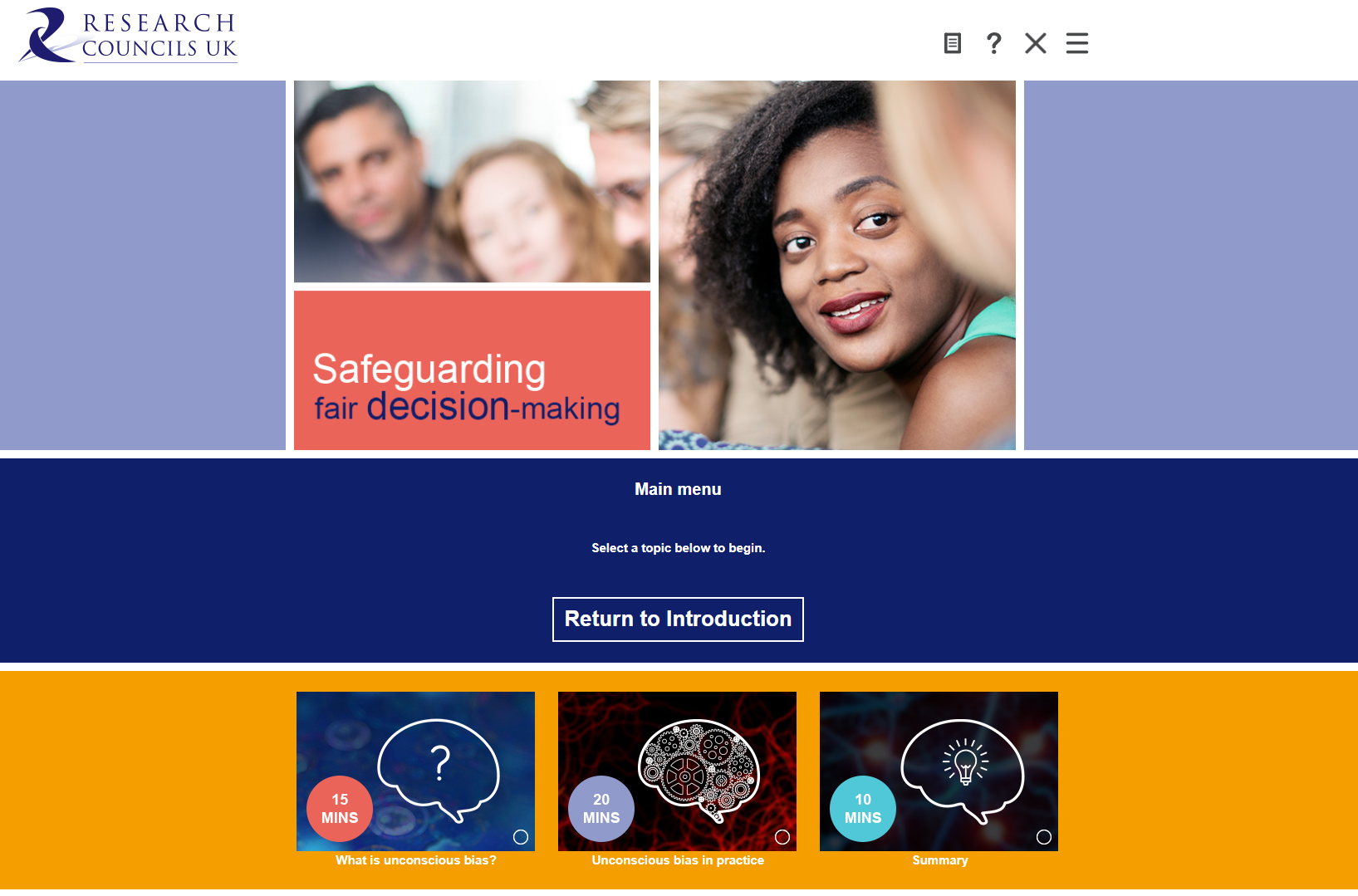
Partnering with a business psychologist SME, we designed a blended course with three core topics.
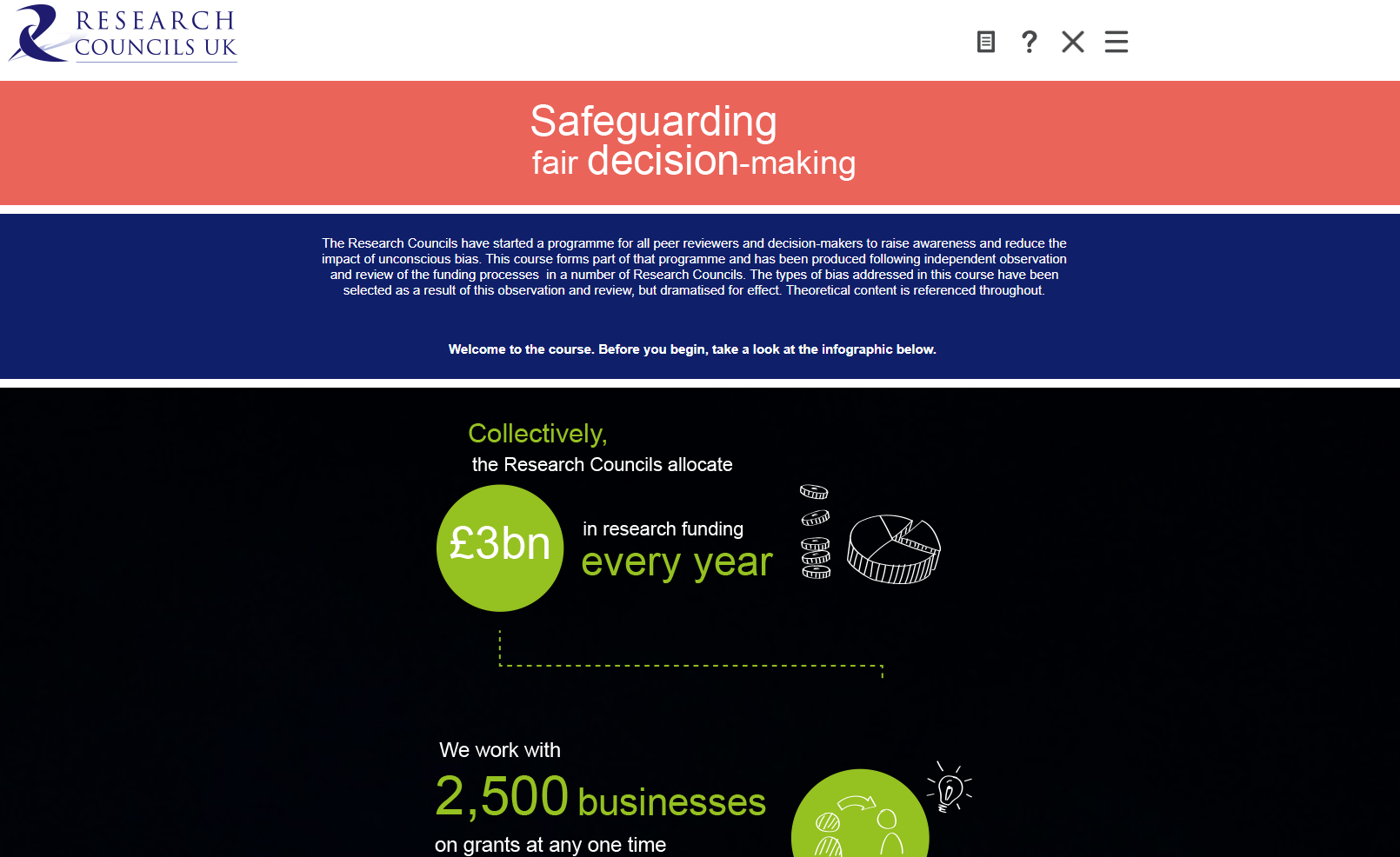
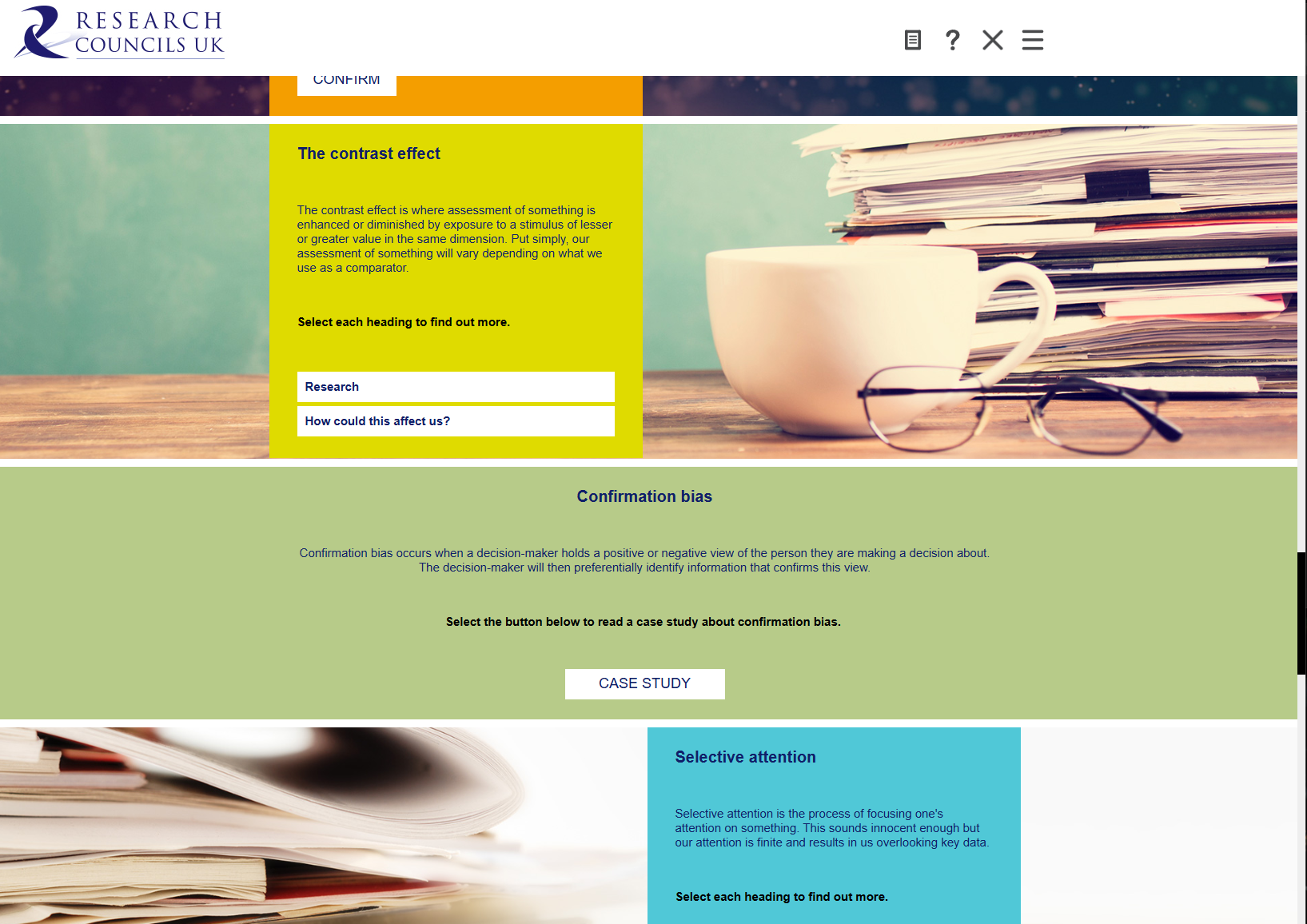
In the first, we provide an infographic with a series of cited statistics to engage learners with why this content is so important. Following this, learners are introduced to the concept of unconscious bias via comparisons with various optical and auditory illusions, using each illusion to introduce a different type of bias, such as the contrast effect, confirmation bias, and groupthink. Each explanation features citations to ensure the sceptical, academic audience can research the topic further if they wish.
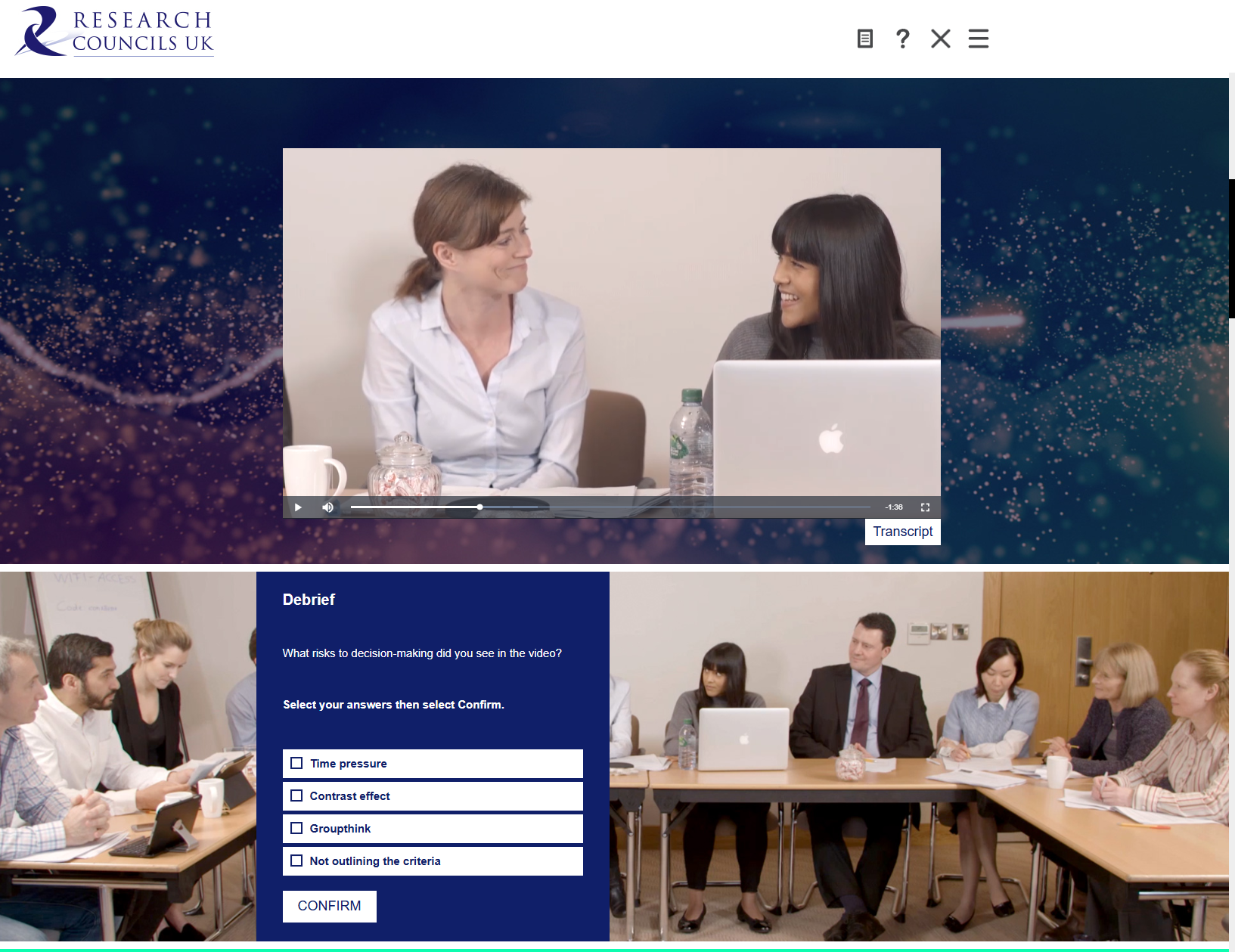
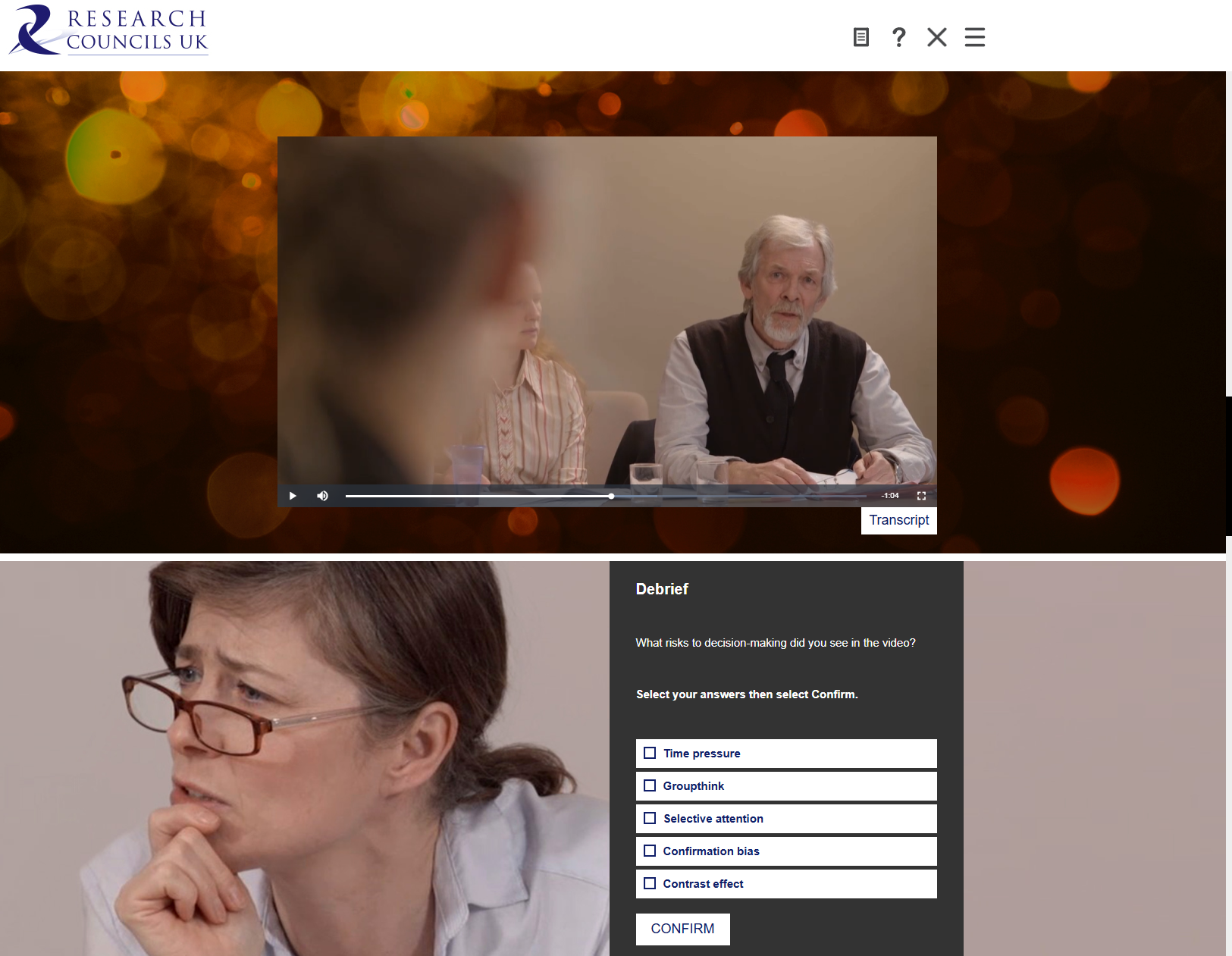
Once the theoretical fundamentals are in place, learners are given the opportunity to contextualise their learning by observing a fictionalised approvals meeting which plays out through several live acted scenes. To enhance authenticity, we included some anonymised problematic quotes from meetings in the past, provided by RCUK SMEs. Once the learner has watched a scene, they choose what kind of bias - if any - they believe was displayed in the clip, and receive feedback. The scenes were filmed on site with professional actors.
The course summary features a printable PDF resource with reminders of what types of bias to look out for and how to spot them.